Already in to May where is the year going?
Easter is a memory, as is the May Day however looking forward more and more local and national events start to populate the calendar many of them being held in the SWAST area.
Locally events start to take place on Poole Quay, the regular Tuesday bike nights have already started and the Poole Boat Show is fast approaching. Running jointly is the European Maritime Festival and conference. I attended table top exercises for both these events this week. These were to look at how the event organiser and staff would cope with a variety of scenarios from bad weather to lost children. Predicted numbers for the joint events are around forty five thousand over the three days. This will be a large influx of visitors to the town and can only be of benefit to the local economy.
This weekend sees me on lates and night on Monday and Tuesday covering our operational commander or duty officer role. The mixed weather can bring a variety of incidents alongside the normal day to day management of the sector. Whilst I have been on leave the team have dealt with a number of significant and high profile incidents.
As the operational commander we can still be tasked to incidents as an initial response and we still attend the same development days and shifts with the learning development officer as our teams do. This ensures we deliver a high standard of care to our patients. In addition to this we receive additional training as operational commanders and our competency is assessed in this role again to ensure we are able to deliver a high level of care through our overall command and control of an incident. High quality patient care does not just stop with the hands on clinical bits!
Stay safe and have a good week.
Showing posts with label EPRR. Show all posts
Showing posts with label EPRR. Show all posts
Saturday, 6 May 2017

Saturday, 1 April 2017
Changing times
As the year rolls on changes are a foot. Paramedics nationally have moved in to pay band six with all that entails. All paramedics in band six are going to be expected to act as mentors and carry out station duties, many of which have been carried out locally by Lead Paramedics.
One of the biggest changes will be for our graduate paramedics who will now be classed as newly qualified Paramedics and will be in band five for 24 months. This will build on the current preceptorship period that our new graduates already undergo. During this period they will receive additional support, be expected to complete a portfolio to prove their competencies and also have certain of their clinical decisions for high risk patients, who they wish to discharge at home verified by a senior clinician. Also as part of the changes our current Advance Technicians will formally take rota positions as lead clinicians.
All of the above are national initiatives and guidance to ensure Paramedics are recognised for the high degree of clinical skills and expertise in the pre- hospital and unplanned care environment. As the Paramedic role continue to develop the vital role we play will continue to be recognised. Another operations officer and myself were talking this week and when we both joined the Paramedic role was restricted to the ambulance service with very few opportunities out side of the service. Now days Paramedics are in high demand across the whole of the health care environment and we are seen as having transferable skills.
This week will see three of my colleagues attending Operational and Tactical command training in Exeter further developing their skills and competency.
Today is April first, the clocks have gone forward giving lighter evenings and the sun is shining. All of this combined means lots of people out and about. Around the harbour there is a frenzy of activity getting boats ready for the summer season. This time of year also sees more motorcycles out and about. Many riders may not have ridden over the winter months and may be a little rusty. With this in mind guys take your time and maybe even think about some additional training, there are lots of options out there IAM, ROSPA, Bikesafe all offer training and ride outs. Go on your never to old to learn.
Stay safe
One of the biggest changes will be for our graduate paramedics who will now be classed as newly qualified Paramedics and will be in band five for 24 months. This will build on the current preceptorship period that our new graduates already undergo. During this period they will receive additional support, be expected to complete a portfolio to prove their competencies and also have certain of their clinical decisions for high risk patients, who they wish to discharge at home verified by a senior clinician. Also as part of the changes our current Advance Technicians will formally take rota positions as lead clinicians.
All of the above are national initiatives and guidance to ensure Paramedics are recognised for the high degree of clinical skills and expertise in the pre- hospital and unplanned care environment. As the Paramedic role continue to develop the vital role we play will continue to be recognised. Another operations officer and myself were talking this week and when we both joined the Paramedic role was restricted to the ambulance service with very few opportunities out side of the service. Now days Paramedics are in high demand across the whole of the health care environment and we are seen as having transferable skills.
This week will see three of my colleagues attending Operational and Tactical command training in Exeter further developing their skills and competency.
Today is April first, the clocks have gone forward giving lighter evenings and the sun is shining. All of this combined means lots of people out and about. Around the harbour there is a frenzy of activity getting boats ready for the summer season. This time of year also sees more motorcycles out and about. Many riders may not have ridden over the winter months and may be a little rusty. With this in mind guys take your time and maybe even think about some additional training, there are lots of options out there IAM, ROSPA, Bikesafe all offer training and ride outs. Go on your never to old to learn.
Stay safe
Saturday, 18 March 2017
Back room services
As the financial year begins to draw to a close the normal events and reminders start to pop in to our inboxes. The joys of the annual stock take, reminders about completing mandatory training and the requirements to complete career conversations ( Appraisals) with staff all signify this time of the year as much as the first mince pies in the shops indicate the coming of Christmas.
Most of my blogs focus on our operation team and responses to incidents but I thought perhaps I should look at the "backroom" services. these are essential to the running of a large organisation like ours their hard work and support behind the scenes enables us to respond and deliver high quality patient focussed care.
So who do we start with? I think our scheduling team who are tasked with getting the correct people in the right place to provide 24/7 cover are a core function. Wait.... what's that the fleet team ensuring we have vehicles for staff to go on. NO.. No ... our stores team ensuring that our staff have drugs and consumables to use once deployed to a shift and on a vehicle. The HR team for recruiting those staff in the first place.......the research team for ensuring we are using best evidence based practice running alongside the Clinical team who work with all our local stakeholders to develop care pathways and also contribute to national programs. What about our resilience team who ensure we are able to respond to significant or major incidents, provide expert support and ensure we can continue to deliver business as usual during significant incidents. We also have a 24/7 logistics desk which a "one stop shop" for accessing our backroom teams out of hours. Alongside this like any normal business we have a procurement team, finance team, payroll, and all the normal everyday administration functions, all of whom contribute to the day to day running of SWASFT and delivery of patient care.
As you can see this is just the tip of the iceberg of the teams that ensure operations can deliver the clinical care to our patients. If I have not mentioned your team directly I apologise.
I have not mentioned our clinical hubs, 111 and the urgent care service which all form part of the SWASFT family delivering care to the residents and visitors to the south west.
The other thing the end of the financial year tends to signify is the start of the holiday seasons and the associated increase in population and call volume.
Just in case your wondering 281 days until Christmas!!!!!

Most of my blogs focus on our operation team and responses to incidents but I thought perhaps I should look at the "backroom" services. these are essential to the running of a large organisation like ours their hard work and support behind the scenes enables us to respond and deliver high quality patient focussed care.
So who do we start with? I think our scheduling team who are tasked with getting the correct people in the right place to provide 24/7 cover are a core function. Wait.... what's that the fleet team ensuring we have vehicles for staff to go on. NO.. No ... our stores team ensuring that our staff have drugs and consumables to use once deployed to a shift and on a vehicle. The HR team for recruiting those staff in the first place.......the research team for ensuring we are using best evidence based practice running alongside the Clinical team who work with all our local stakeholders to develop care pathways and also contribute to national programs. What about our resilience team who ensure we are able to respond to significant or major incidents, provide expert support and ensure we can continue to deliver business as usual during significant incidents. We also have a 24/7 logistics desk which a "one stop shop" for accessing our backroom teams out of hours. Alongside this like any normal business we have a procurement team, finance team, payroll, and all the normal everyday administration functions, all of whom contribute to the day to day running of SWASFT and delivery of patient care.
As you can see this is just the tip of the iceberg of the teams that ensure operations can deliver the clinical care to our patients. If I have not mentioned your team directly I apologise.
I have not mentioned our clinical hubs, 111 and the urgent care service which all form part of the SWASFT family delivering care to the residents and visitors to the south west.
The other thing the end of the financial year tends to signify is the start of the holiday seasons and the associated increase in population and call volume.
Just in case your wondering 281 days until Christmas!!!!!

Stay safe
Sunday, 5 March 2017
Commander Courses
This week I have been in Exeter at the Ambulance Special Operations Centre, home to one of our Hazardous Area Response Teams and the Emergency Preparedness, Response and Recovery directorate of the trust.
Over the five days I attended the trusts new Operational, Tactical and Strategic training courses. These courses are designed to ensure all staff who may be called upon to perform a commanders role at an incident are suitably trained and have proved their competence against the national occupational standards. However this is only the start as all commanders will need to show continual professional development by attending both live and table top exercises, pre-planned events and live incidents.
In the normal way the days use sessions of interactive learning , group tasks and scenarios to develop your ability and develop key skills. Competency is assessed both using the scenarios and tests. The first two days are the Operational commanders course followed by two days of the Tactical Commanders course and finally the Strategic Commanders day. Although these roles vary in their focus at an incident the underlying principles used are the same. These core skills and processes can be used at any incident and are scaleable depending on the nature, type and complexity of the incident being dealt with.
The courses are being taught over the next eighteen months and the trust have been lucky to secure a highly experienced and respected tutor to deliver this training. All in all a great week with lots of learning, shared experiences and development. Courses of this type and development of the trusts commanders can only lead to improved patient care.
Thanks to everyone involved over the whole week.
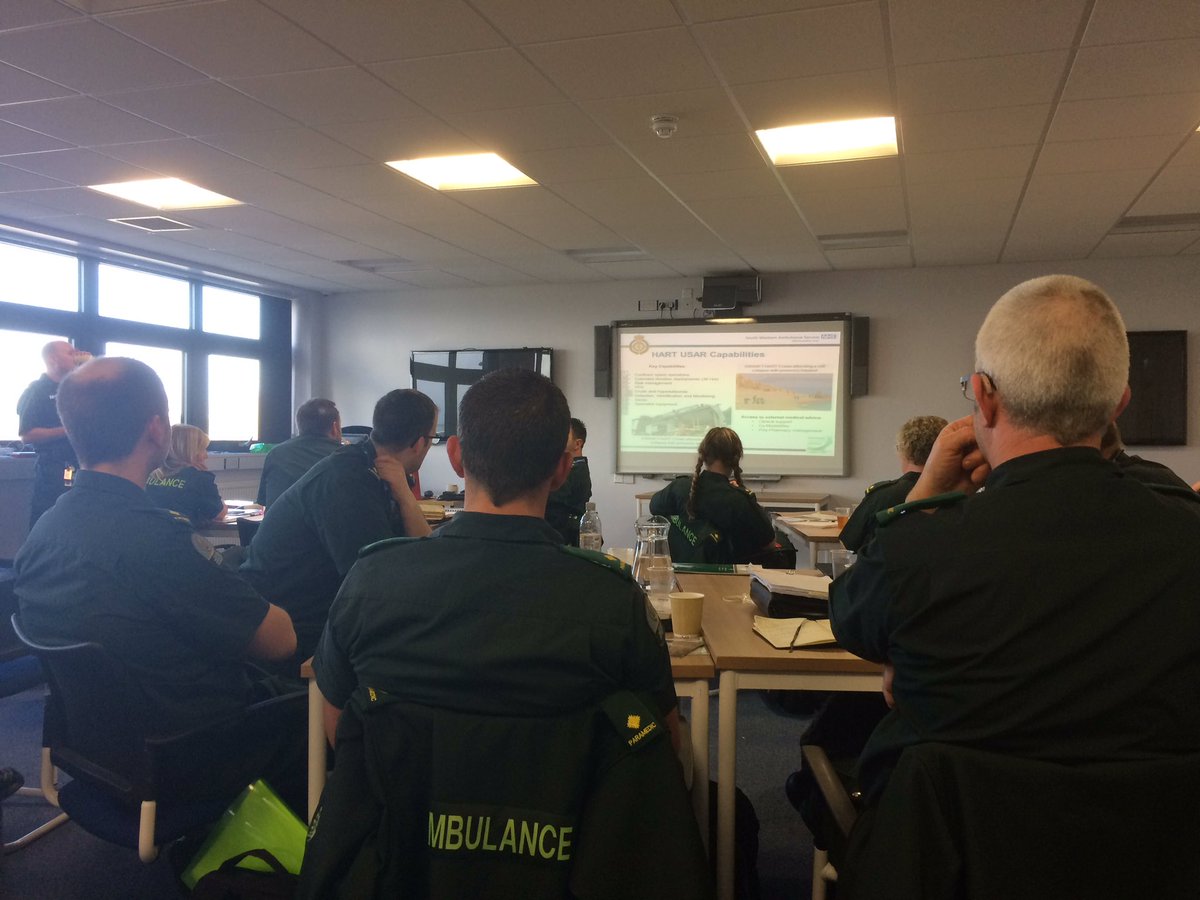
Day one of the Operational Commanders Course
As always stay safe.
Over the five days I attended the trusts new Operational, Tactical and Strategic training courses. These courses are designed to ensure all staff who may be called upon to perform a commanders role at an incident are suitably trained and have proved their competence against the national occupational standards. However this is only the start as all commanders will need to show continual professional development by attending both live and table top exercises, pre-planned events and live incidents.
In the normal way the days use sessions of interactive learning , group tasks and scenarios to develop your ability and develop key skills. Competency is assessed both using the scenarios and tests. The first two days are the Operational commanders course followed by two days of the Tactical Commanders course and finally the Strategic Commanders day. Although these roles vary in their focus at an incident the underlying principles used are the same. These core skills and processes can be used at any incident and are scaleable depending on the nature, type and complexity of the incident being dealt with.
The courses are being taught over the next eighteen months and the trust have been lucky to secure a highly experienced and respected tutor to deliver this training. All in all a great week with lots of learning, shared experiences and development. Courses of this type and development of the trusts commanders can only lead to improved patient care.
Thanks to everyone involved over the whole week.
Day one of the Operational Commanders Course
As always stay safe.
Saturday, 25 February 2017
Exercise "Dolphin"
Bit of a busy week this week. I finished my three nights on Monday morning then met Rich Coleman from Dorset And Wiltshire Fire And Rescue in the afternoon for a final run through and check of things before Exercise Dolphin. Then down to the venue to set up the room.
After all the planning and preparation the big day had arrived. Tuesday morning saw myself and Rich at the port of Poole bright and early, by eight thirty we had fifteen of the exercise participants already arrived and networking.
Exercise Dolphin was a table top exercise organised by the Poole Harbour Islands Safety Group to evaluate the National Trust's plans for dealing with a significant incident on Brownsea Island and also the emergency services and other agencies response to the incident. The exercise bought together representatives from all of the inhabited islands in the harbour, Poole Harbour Commissioners, local marine contractors, Perenco, Poole Borough Council, Dorset Police , South Western Ambulance Service, Dorset And Wiltshire Fire and Rescue, Dorset Civil Contingencies Unit, Dorset Wildlife Trust, passenger boat operators and representatives from the National Trust's Operational Risk Team. In total we had over thirty participants in the day and the depth of knowledge and experience in the room led to interesting and informed discussions.
The participants were split in to syndicates for the day and presented with the scenario and injects, they were then given tasks and asked to manage the incident using existing plans and using the Joint Emergency Service Interoperability Program principles. The day was well received and met the aim and objectives set during the planning stages. There were lots of learning points and suggestions throughout the day and these have been captured along with debrief documents from all participants. All this information will be correlated and an exercise report produced with suggestions for improvements and action points.
Thank you to everyone involved in the day I felt it was great success. It has been suggested we should have an exercise like this every two or three years.......

Networking before the exercise started.
 Group work and discussion with lots of information to consider.
 Syndicates hard at work.
Tuesday saw me assisting the Paramedic Science Faculty at Bournemouth University with interviews for prospective students for the degree starting in September. An interesting day and I was impressed with the high calibre of the candidates.
Wednesday and Thursday saw me back at my normal day job covering the Operational Commander role for East Dorset on days. Lots of bits and pieces to deal with to ensure the sector performs including some hospital delays and two significant road traffic collisions.
Next week see me in Exeter on our trusts updated Operational and Tactical commanders courses.
Stay safe.
After all the planning and preparation the big day had arrived. Tuesday morning saw myself and Rich at the port of Poole bright and early, by eight thirty we had fifteen of the exercise participants already arrived and networking.
Exercise Dolphin was a table top exercise organised by the Poole Harbour Islands Safety Group to evaluate the National Trust's plans for dealing with a significant incident on Brownsea Island and also the emergency services and other agencies response to the incident. The exercise bought together representatives from all of the inhabited islands in the harbour, Poole Harbour Commissioners, local marine contractors, Perenco, Poole Borough Council, Dorset Police , South Western Ambulance Service, Dorset And Wiltshire Fire and Rescue, Dorset Civil Contingencies Unit, Dorset Wildlife Trust, passenger boat operators and representatives from the National Trust's Operational Risk Team. In total we had over thirty participants in the day and the depth of knowledge and experience in the room led to interesting and informed discussions.
The participants were split in to syndicates for the day and presented with the scenario and injects, they were then given tasks and asked to manage the incident using existing plans and using the Joint Emergency Service Interoperability Program principles. The day was well received and met the aim and objectives set during the planning stages. There were lots of learning points and suggestions throughout the day and these have been captured along with debrief documents from all participants. All this information will be correlated and an exercise report produced with suggestions for improvements and action points.
Thank you to everyone involved in the day I felt it was great success. It has been suggested we should have an exercise like this every two or three years.......

Networking before the exercise started.
Group work and discussion with lots of information to consider. Syndicates hard at work.Tuesday saw me assisting the Paramedic Science Faculty at Bournemouth University with interviews for prospective students for the degree starting in September. An interesting day and I was impressed with the high calibre of the candidates.
Wednesday and Thursday saw me back at my normal day job covering the Operational Commander role for East Dorset on days. Lots of bits and pieces to deal with to ensure the sector performs including some hospital delays and two significant road traffic collisions.
Next week see me in Exeter on our trusts updated Operational and Tactical commanders courses.
Stay safe.
Subscribe to:
Posts (Atom)