Already in to May where is the year going?
Easter is a memory, as is the May Day however looking forward more and more local and national events start to populate the calendar many of them being held in the SWAST area.
Locally events start to take place on Poole Quay, the regular Tuesday bike nights have already started and the Poole Boat Show is fast approaching. Running jointly is the European Maritime Festival and conference. I attended table top exercises for both these events this week. These were to look at how the event organiser and staff would cope with a variety of scenarios from bad weather to lost children. Predicted numbers for the joint events are around forty five thousand over the three days. This will be a large influx of visitors to the town and can only be of benefit to the local economy.
This weekend sees me on lates and night on Monday and Tuesday covering our operational commander or duty officer role. The mixed weather can bring a variety of incidents alongside the normal day to day management of the sector. Whilst I have been on leave the team have dealt with a number of significant and high profile incidents.
As the operational commander we can still be tasked to incidents as an initial response and we still attend the same development days and shifts with the learning development officer as our teams do. This ensures we deliver a high standard of care to our patients. In addition to this we receive additional training as operational commanders and our competency is assessed in this role again to ensure we are able to deliver a high level of care through our overall command and control of an incident. High quality patient care does not just stop with the hands on clinical bits!
Stay safe and have a good week.
Showing posts with label multiagency. Show all posts
Showing posts with label multiagency. Show all posts
Saturday, 6 May 2017

Sunday, 12 March 2017
What do we do in a day?
After the excitement of the past few weeks it's back to the main day job this weekend.
So as the Operational Officer, Duty Officer for East Dorset, what have I been up to during my shifts?
Friday morning handover from the night officer a few minor things to be aware of. Vehicle daily inspection to ensure it is road worthy and has all the necessary equipment, supplies and drugs and then preparation for our division daily conference call at 0800 our.
So as the Operational Officer, Duty Officer for East Dorset, what have I been up to during my shifts?
Friday morning handover from the night officer a few minor things to be aware of. Vehicle daily inspection to ensure it is road worthy and has all the necessary equipment, supplies and drugs and then preparation for our division daily conference call at 0800 our.
This call looks at each sectors performance , potential issues for the day including hospital bed states and handover delays. It also looks at staffing and possible influences from the weather or local events. As I had been off for a few days, once the call was over I had the chance to wade through my inbox and deal with any matters arising.
Then it was a trip to the other two stations in our sector and also the two acute hospitals.
I was then tasked to a incident on the beach and there was great patient focused , multi agency working between the ambulance service, police, coastguard and fire and rescue to bring the incident to a positive closure.
The afternoon became busier with some stacked calls and several vehicles at hospital leading to some handover delays. A call letting me know a member of staff had gone sick and regular monitoring of handover times and incidents bought the day to close. Handover to the night ops officer and the sector looks in a good position.
Saturday saw me covering the 1100 - 2100 shift lots going on in the patch including premier league football. After checking my vehicle and a trip down to the local acute hospital it was back to Bournemouth Station and a productive day with an appraisal completed and written up, several minor problems around the patch easily sorted. A DATIX (adverse incident) investigated and closed with feedback to the the crew.Also mobilised to three incidents. Unfortunately I was then unavailable as the vehicle I was using developed a defect. Whilst waiting for the duty fitter to arrive I continued to monitor the hospital handover times and dealt with a couple of other problems by phone.
Handover to the night DO was done with little to pass over other than he was going to have to swap vehicles not the greatest of starts to his shift
As you can see a varied mix of things we do on a day to day basis. No two days are the same and each shifts presents a variety of challenges to deal with.
Back in today 1100 -2100 again so let's see what today brings.
Stay safe
Sunday, 5 March 2017
Commander Courses
This week I have been in Exeter at the Ambulance Special Operations Centre, home to one of our Hazardous Area Response Teams and the Emergency Preparedness, Response and Recovery directorate of the trust.
Over the five days I attended the trusts new Operational, Tactical and Strategic training courses. These courses are designed to ensure all staff who may be called upon to perform a commanders role at an incident are suitably trained and have proved their competence against the national occupational standards. However this is only the start as all commanders will need to show continual professional development by attending both live and table top exercises, pre-planned events and live incidents.
In the normal way the days use sessions of interactive learning , group tasks and scenarios to develop your ability and develop key skills. Competency is assessed both using the scenarios and tests. The first two days are the Operational commanders course followed by two days of the Tactical Commanders course and finally the Strategic Commanders day. Although these roles vary in their focus at an incident the underlying principles used are the same. These core skills and processes can be used at any incident and are scaleable depending on the nature, type and complexity of the incident being dealt with.
The courses are being taught over the next eighteen months and the trust have been lucky to secure a highly experienced and respected tutor to deliver this training. All in all a great week with lots of learning, shared experiences and development. Courses of this type and development of the trusts commanders can only lead to improved patient care.
Thanks to everyone involved over the whole week.
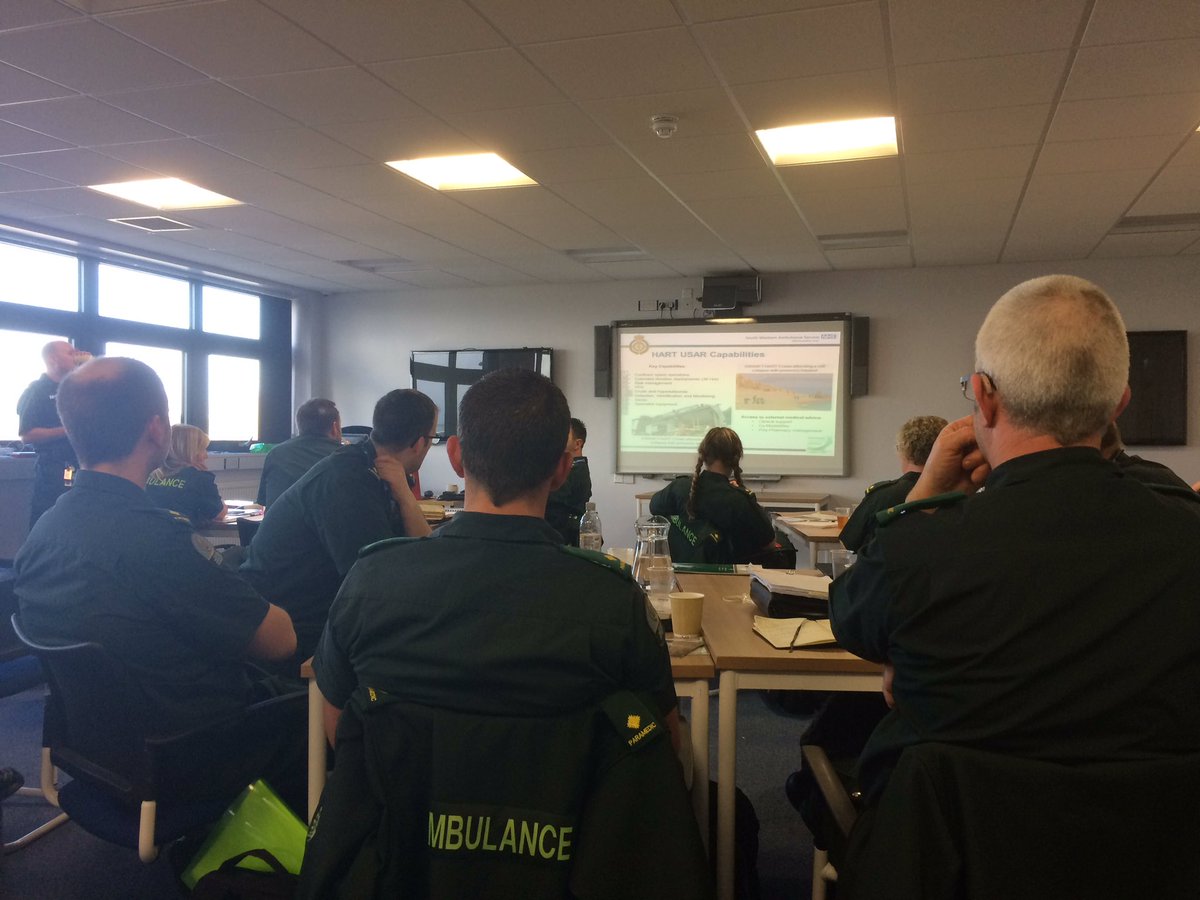
Day one of the Operational Commanders Course
As always stay safe.
Over the five days I attended the trusts new Operational, Tactical and Strategic training courses. These courses are designed to ensure all staff who may be called upon to perform a commanders role at an incident are suitably trained and have proved their competence against the national occupational standards. However this is only the start as all commanders will need to show continual professional development by attending both live and table top exercises, pre-planned events and live incidents.
In the normal way the days use sessions of interactive learning , group tasks and scenarios to develop your ability and develop key skills. Competency is assessed both using the scenarios and tests. The first two days are the Operational commanders course followed by two days of the Tactical Commanders course and finally the Strategic Commanders day. Although these roles vary in their focus at an incident the underlying principles used are the same. These core skills and processes can be used at any incident and are scaleable depending on the nature, type and complexity of the incident being dealt with.
The courses are being taught over the next eighteen months and the trust have been lucky to secure a highly experienced and respected tutor to deliver this training. All in all a great week with lots of learning, shared experiences and development. Courses of this type and development of the trusts commanders can only lead to improved patient care.
Thanks to everyone involved over the whole week.
Day one of the Operational Commanders Course
As always stay safe.
Saturday, 25 February 2017
Exercise "Dolphin"
Bit of a busy week this week. I finished my three nights on Monday morning then met Rich Coleman from Dorset And Wiltshire Fire And Rescue in the afternoon for a final run through and check of things before Exercise Dolphin. Then down to the venue to set up the room.
After all the planning and preparation the big day had arrived. Tuesday morning saw myself and Rich at the port of Poole bright and early, by eight thirty we had fifteen of the exercise participants already arrived and networking.
Exercise Dolphin was a table top exercise organised by the Poole Harbour Islands Safety Group to evaluate the National Trust's plans for dealing with a significant incident on Brownsea Island and also the emergency services and other agencies response to the incident. The exercise bought together representatives from all of the inhabited islands in the harbour, Poole Harbour Commissioners, local marine contractors, Perenco, Poole Borough Council, Dorset Police , South Western Ambulance Service, Dorset And Wiltshire Fire and Rescue, Dorset Civil Contingencies Unit, Dorset Wildlife Trust, passenger boat operators and representatives from the National Trust's Operational Risk Team. In total we had over thirty participants in the day and the depth of knowledge and experience in the room led to interesting and informed discussions.
The participants were split in to syndicates for the day and presented with the scenario and injects, they were then given tasks and asked to manage the incident using existing plans and using the Joint Emergency Service Interoperability Program principles. The day was well received and met the aim and objectives set during the planning stages. There were lots of learning points and suggestions throughout the day and these have been captured along with debrief documents from all participants. All this information will be correlated and an exercise report produced with suggestions for improvements and action points.
Thank you to everyone involved in the day I felt it was great success. It has been suggested we should have an exercise like this every two or three years.......

Networking before the exercise started.
 Group work and discussion with lots of information to consider.
 Syndicates hard at work.
Tuesday saw me assisting the Paramedic Science Faculty at Bournemouth University with interviews for prospective students for the degree starting in September. An interesting day and I was impressed with the high calibre of the candidates.
Wednesday and Thursday saw me back at my normal day job covering the Operational Commander role for East Dorset on days. Lots of bits and pieces to deal with to ensure the sector performs including some hospital delays and two significant road traffic collisions.
Next week see me in Exeter on our trusts updated Operational and Tactical commanders courses.
Stay safe.
After all the planning and preparation the big day had arrived. Tuesday morning saw myself and Rich at the port of Poole bright and early, by eight thirty we had fifteen of the exercise participants already arrived and networking.
Exercise Dolphin was a table top exercise organised by the Poole Harbour Islands Safety Group to evaluate the National Trust's plans for dealing with a significant incident on Brownsea Island and also the emergency services and other agencies response to the incident. The exercise bought together representatives from all of the inhabited islands in the harbour, Poole Harbour Commissioners, local marine contractors, Perenco, Poole Borough Council, Dorset Police , South Western Ambulance Service, Dorset And Wiltshire Fire and Rescue, Dorset Civil Contingencies Unit, Dorset Wildlife Trust, passenger boat operators and representatives from the National Trust's Operational Risk Team. In total we had over thirty participants in the day and the depth of knowledge and experience in the room led to interesting and informed discussions.
The participants were split in to syndicates for the day and presented with the scenario and injects, they were then given tasks and asked to manage the incident using existing plans and using the Joint Emergency Service Interoperability Program principles. The day was well received and met the aim and objectives set during the planning stages. There were lots of learning points and suggestions throughout the day and these have been captured along with debrief documents from all participants. All this information will be correlated and an exercise report produced with suggestions for improvements and action points.
Thank you to everyone involved in the day I felt it was great success. It has been suggested we should have an exercise like this every two or three years.......

Networking before the exercise started.
Group work and discussion with lots of information to consider. Syndicates hard at work.Tuesday saw me assisting the Paramedic Science Faculty at Bournemouth University with interviews for prospective students for the degree starting in September. An interesting day and I was impressed with the high calibre of the candidates.
Wednesday and Thursday saw me back at my normal day job covering the Operational Commander role for East Dorset on days. Lots of bits and pieces to deal with to ensure the sector performs including some hospital delays and two significant road traffic collisions.
Next week see me in Exeter on our trusts updated Operational and Tactical commanders courses.
Stay safe.
Friday, 10 February 2017
Liasion working
This weekend sees me on nights covering the ops officer shifts for East Dorset. Cold weather has hit the south coast with low temperatures both during the day and overnight. We have even had a flurry of the white stuff and guess what ... so far the world has not come to a grinding halt.
As you will have seen from last weeks blog my daughter had her first job interview earlier this week. I am please to say she was successful and will be starting work in July as a diagnostic radiographer once she has completed her university course and becomes HCPC registered.
As any one who has seen the news , read a newspaper or been exposed to social media the NHS is making headlines for all the wrong reasons. I think it is important to acknowledge the hard work and dedication shown by staff at every level and in every directorate across the whole of the NHS. This continued hard work ensures that patients continue to receive high levels of care despite the huge pressures faced on a daily basis. There is always talk of winter pressures and it is being reported that demand on NHS services this winter is the highest it has ever been, however this follows a sustained period of pressure and high bed occupancy over the previous year.
From my perspective as a operations officer dealing with handover delays, as a team in East Dorset this has been something we have to deal with throughout the year to a varying degree. Close liaison with our two local acute hospitals, new ways working and regular meetings all mean that we work together to reduce delays and improve patient care.
One night down two more to go off to bed now.
Stay safe.
As you will have seen from last weeks blog my daughter had her first job interview earlier this week. I am please to say she was successful and will be starting work in July as a diagnostic radiographer once she has completed her university course and becomes HCPC registered.
As any one who has seen the news , read a newspaper or been exposed to social media the NHS is making headlines for all the wrong reasons. I think it is important to acknowledge the hard work and dedication shown by staff at every level and in every directorate across the whole of the NHS. This continued hard work ensures that patients continue to receive high levels of care despite the huge pressures faced on a daily basis. There is always talk of winter pressures and it is being reported that demand on NHS services this winter is the highest it has ever been, however this follows a sustained period of pressure and high bed occupancy over the previous year.
From my perspective as a operations officer dealing with handover delays, as a team in East Dorset this has been something we have to deal with throughout the year to a varying degree. Close liaison with our two local acute hospitals, new ways working and regular meetings all mean that we work together to reduce delays and improve patient care.
One night down two more to go off to bed now.
Stay safe.
Saturday, 26 November 2016
Multi agency working
Yesterday saw me at a meeting of the Poole Harbour Islands Safety Group. We meet twice a year to discuss issues and problems facing the inhabitants of the islands. There are around twenty full time inhabitants this number can swell to over two thousand when the visitors decend on Brownsea Island.
Just because you live on a island doesn't mean you don't get ill, suffer accidents or other emergencies. You can still.be a victim of crime or have a fire. The inhabitants still dial 999 , 111, 101 or contact their GP in the same way that you and I do. They also expect the same level.of service although all realise the logistics of living on an island will impact on this. So this is where the PHISG comes in to ensure as responding agencies have robust plans in place to respond to the island communities.
The group is made of of the emergencies services , island owners and staff, the harbour commsioners and other interested parties. Good progress is being made with all the inhabited Islands now having defibrillators and training , fire fighting equipment and training. The plans produced by both the islands and the responders are reviewed and in the new year we will be holding a table top exercise to validate these plans and seek improvements.
Planning is well underway for this and it should prove to be an interesting day for all involved.
Stay safe and remember Xmas is coming.
Sunday, 30 October 2016
Joint working
Good morning all I hope you have had a good week. This weekend sees me covering lates 1100 until 2100. This shift normally brings a variety incidents and taskings.
Hospitals always seem to be busier over the weekend ( not a proven fact it just seems like it). As operations officers we liaise with our local hospitals to avoid and manage handover delays. East Dorset has two acute hospitals in our patch and this can often prove challenging. Our operations officers meet with both hospitals on a weekly basis to discuss any problems which arise and to work out solutions or changes to practice. These meetings are in addition to our daily contacts to deal with issues and potential problems as they occur.
The past few weeks has seen a large number of serious incident in East Dorset, which has seen joint working between all responding agencies. As more JESIP (Joint Emergency Services Interoperasbility Program) sessions take place over the coming months this will give the opportunity to train more commanders and refresh others in key skills.
JESIP ensures all commanders from the responding agencies use a common and systematic approach to command of an incident. All agencies will have their own roles and responsibilities at an incident but JESIP aims to ensure our initial multi agency response is more organised, structured and practised. Regular use of the JESIP principles at incidents and training exercises means that the principles are embedded into our every day practice and become second nature.
More information about the JESIP program can be found here www.jesip.org.uk/home
Regular meetings with organisations outside of our immediate teams also enables networking to take place and relationships to be built up which can only be beneficial to joint working.
The overarching aim of all our meetings, exercises and joint working at incident is to benefit patients and improve their outcomes by working together.
As always stay safe and don't forget it will be darker earlier due to the clocks going back.
Hospitals always seem to be busier over the weekend ( not a proven fact it just seems like it). As operations officers we liaise with our local hospitals to avoid and manage handover delays. East Dorset has two acute hospitals in our patch and this can often prove challenging. Our operations officers meet with both hospitals on a weekly basis to discuss any problems which arise and to work out solutions or changes to practice. These meetings are in addition to our daily contacts to deal with issues and potential problems as they occur.
The past few weeks has seen a large number of serious incident in East Dorset, which has seen joint working between all responding agencies. As more JESIP (Joint Emergency Services Interoperasbility Program) sessions take place over the coming months this will give the opportunity to train more commanders and refresh others in key skills.
JESIP ensures all commanders from the responding agencies use a common and systematic approach to command of an incident. All agencies will have their own roles and responsibilities at an incident but JESIP aims to ensure our initial multi agency response is more organised, structured and practised. Regular use of the JESIP principles at incidents and training exercises means that the principles are embedded into our every day practice and become second nature.
More information about the JESIP program can be found here www.jesip.org.uk/home
Regular meetings with organisations outside of our immediate teams also enables networking to take place and relationships to be built up which can only be beneficial to joint working.
The overarching aim of all our meetings, exercises and joint working at incident is to benefit patients and improve their outcomes by working together.
As always stay safe and don't forget it will be darker earlier due to the clocks going back.
Sunday, 18 September 2016
Frequent callers
Risk assessments has been the main job this week. I have been completing the health and safety risk assessments across the three stations in our sector. Overall no real major problems identified but a wish list prepared for the estates team. There is one major piece of work related to this I am continuing with and more about that in the future.
If you are a regular reader of my blog (apparently there are some!) my last ramblings talked about the efforts made to reduce the volume of frequent callers. I attended a multi disciplinary meeting this week for one of the top five frequent callers for Dorset. Other agencies represented were the patients GP, community matron, Community mental heath team, district nursing team, physiotherapists and social services. This was to ensure that all agencies could share information and agree a joint approach.
This part of the process was to ask the the patient to sign a Acceptable Behaviour Contract. This is a voluntary agreement between the patient and the Trust with several clauses, all of which revolve around reduction in calls to the ambulance service and requiring engagement with other support services. It also requires the patient to be polite and non threatening to NHS staff whether in person or on the phone. Despite the patients GP visiting the patient several times in the run up to the meeting, the patient did not attend and a further date has been organised for the GP and myself to visit the patient at home.
I will reiterate at this point, this whole process is to try to ensure the patient is engaging with the services available to them. This ensures that they receive the help and assistance they need. If this is in place the patient benefits and as a service we normally see a reduction in our call rate.
The frequent callers often pose difficulties to all agencies involved in both their care and social situation. This often leads to the police being involved and they also have a similar process in place. In the past the agencies probably would have worked in isolation and the combined multi agency approach we now use ensures that these patients are not slipping through the net or being missed due to lack of information sharing. The ambulance service is often the first port of call for many of these patients and without the hard work of our small frequent caller team many of these patients would not be highlighted to the teams involved in their care.
I have a few days off this week with lots planned so whatever you are doing stay safe and have fun.
If you are a regular reader of my blog (apparently there are some!) my last ramblings talked about the efforts made to reduce the volume of frequent callers. I attended a multi disciplinary meeting this week for one of the top five frequent callers for Dorset. Other agencies represented were the patients GP, community matron, Community mental heath team, district nursing team, physiotherapists and social services. This was to ensure that all agencies could share information and agree a joint approach.
This part of the process was to ask the the patient to sign a Acceptable Behaviour Contract. This is a voluntary agreement between the patient and the Trust with several clauses, all of which revolve around reduction in calls to the ambulance service and requiring engagement with other support services. It also requires the patient to be polite and non threatening to NHS staff whether in person or on the phone. Despite the patients GP visiting the patient several times in the run up to the meeting, the patient did not attend and a further date has been organised for the GP and myself to visit the patient at home.
I will reiterate at this point, this whole process is to try to ensure the patient is engaging with the services available to them. This ensures that they receive the help and assistance they need. If this is in place the patient benefits and as a service we normally see a reduction in our call rate.
The frequent callers often pose difficulties to all agencies involved in both their care and social situation. This often leads to the police being involved and they also have a similar process in place. In the past the agencies probably would have worked in isolation and the combined multi agency approach we now use ensures that these patients are not slipping through the net or being missed due to lack of information sharing. The ambulance service is often the first port of call for many of these patients and without the hard work of our small frequent caller team many of these patients would not be highlighted to the teams involved in their care.
I have a few days off this week with lots planned so whatever you are doing stay safe and have fun.
Sunday, 24 July 2016
Sunny summer
Nights this week, saw lots of multi agency working with the Police and Fire and Rescue Service. Thanks to our partner agencies for their help and support. Joint working = patient focused = better patient outcomes.
The hot weather has already led to several water related incidents both locally and nationally. With school holidays in full swing there are likely to be more. Working in a coastal location these risks seem part of everyday life however tragedies can occur in inland bodies of water. Please remember although it may be hot on land or on shore, water and sea temperatures still remain cold.
The RNLI run their respect the water campaign to high light the risks of water. google RNLI Respect for information and advice.
The school holidays and good weather always lead to an increase in visitor numbers to the local area. This leads to an increase in incidents, so please choose wisely and think do you need an emergency ambulance?
Hopefully the good weather will continue, have a good week and stay safe.
The hot weather has already led to several water related incidents both locally and nationally. With school holidays in full swing there are likely to be more. Working in a coastal location these risks seem part of everyday life however tragedies can occur in inland bodies of water. Please remember although it may be hot on land or on shore, water and sea temperatures still remain cold.
The RNLI run their respect the water campaign to high light the risks of water. google RNLI Respect for information and advice.
The school holidays and good weather always lead to an increase in visitor numbers to the local area. This leads to an increase in incidents, so please choose wisely and think do you need an emergency ambulance?
Hopefully the good weather will continue, have a good week and stay safe.
Subscribe to:
Posts (Atom)